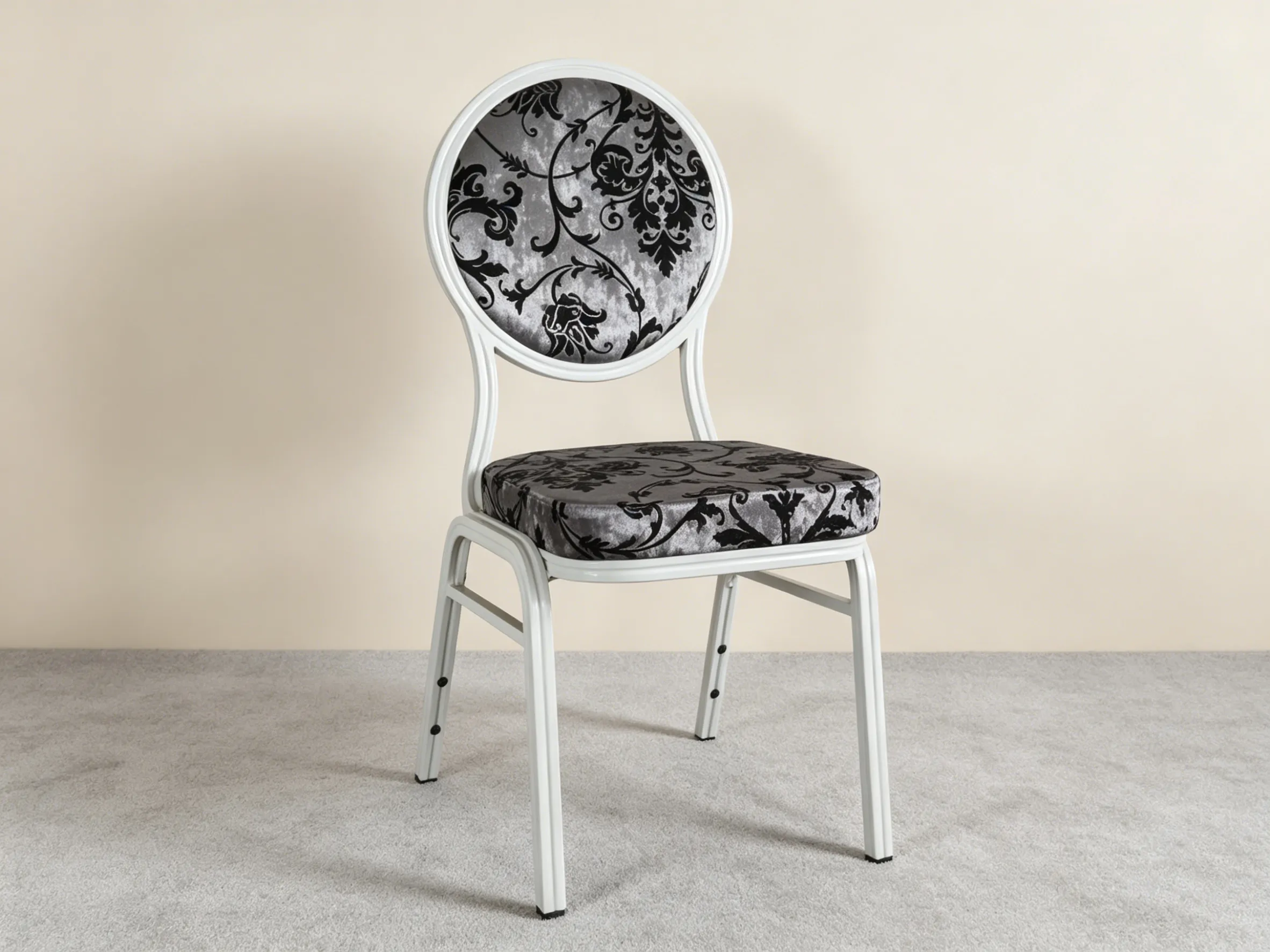
Every year, thousands of hotels, wedding venues, and event rental companies buy banquet chairs — and every year, a painful share of them discover the difference between a chair that looks commercial-grade and one that actually is. It usually happens around month eight, when the welds start to creak, the powder coat chips at the stacking contact points, and the seat foam flattens into a pancake.
We build banquet chairs for a living — over 500,000 of them a year, shipped to more than 60 countries. This guide is the exact conversation our export team has with buyers every week: what to specify, what to verify, and what to get in writing before you wire a deposit. Whether you buy from us or anyone else, use this to buy once and buy right.
Section 01Start With Your Venue Type
The single biggest buying mistake is choosing a chair before defining its duty cycle. A chair for a hotel ballroom that turns over four events a week lives a completely different life from one in a church hall used twice a month. Before you compare prices, answer three questions:
- Turnover frequency — How many events per week will these chairs serve? Daily-turnover venues need commercial-grade frames (1.2mm tubing) and replaceable seat pads as a baseline, not an upgrade.
- Who handles setup — Professional venue crews with trolleys, or volunteers carrying chairs two at a time? The answer decides how much stacking design and chair weight matter.
- Indoor, outdoor, or both — Outdoor or coastal venues rule out chrome-plated iron entirely (it rusts from the inside) and push you toward 304 stainless or powder-coated aluminum.
A quick reference from our order book: hotel ballrooms standardize on classic steel banquet chairs with vinyl upholstery; wedding venues split between Chiavari (romantic, light) and Napoleon (grand, sculpted); conference centers prioritize stacking height and molded foam comfort for 2-3 hour sessions; rental companies need the toughest stackable frame they can get, because their chairs ride trucks weekly.
Section 02Frame Material: Steel, Aluminum, Stainless, Resin or Wood
The frame is 80% of a chair's lifespan. Here's how the five materials compare in real commercial use:
| Material | Strength | Weight | Rust Risk | Best For |
|---|---|---|---|---|
| Powder-coated steel | ★★★★★ | Medium | Low (if coating intact) | High-turnover ballrooms, conferences |
| 304 stainless steel | ★★★★★ | Medium | Very low | Coastal / humid venues, outdoor terraces |
| Aluminum | ★★★★ | Light | None | Crews that move chairs by hand |
| One-piece resin | ★★★★ | Very light | None | Weddings, rental fleets (Chiavari style) |
| Hardwood (Napoleon style) | ★★★ | Medium-heavy | None | Heritage venues, statement ballrooms |
Section 03Frame Thickness & Weld Quality: The Spec That Predicts Lifespan
If you only check one number on a quote, make it the frame tubing thickness. 1.2mm is the commercial-grade floor. Budget chairs routinely ship at 0.8mm — they pass a showroom inspection, then start flexing at the joints after a season of daily stacking. On a 500-chair order, the price difference between 0.8mm and 1.2mm is trivial; the lifespan difference is measured in years.
The second spec is invisible unless you ask for it: weld quality at the leg joints. A chair fails where the legs meet the seat frame. Ask any supplier for a close-up photo of a weld before ordering. A clean, fully-penetrated weld bead means the chair was welded by a calibrated robot or a senior welder. A spotty, bubbled weld (a "cold weld") is a crack waiting for its first busy season.
Our own production line holds frames to ±0.5mm dimensional accuracy using CNC tube cutting and robotic welding — not because it looks good in a brochure, but because consistent dimensions are what make chairs stack straight, and straight stacks are what keep chairs from being damaged by your own crew.
Section 04Upholstery & Foam: Vinyl vs Fabric
Upholstery is a maintenance decision more than an aesthetic one:
- Vinyl (PU leatherette) — wipes clean in seconds, survives 5+ years of daily commercial use, and costs less up front. The default for banquet halls, rental fleets, and anywhere spills are routine. Ask for fire-retardant vinyl rated to CA-117 or BS 5852.
- Woven fabric (polyester / velvet) — warmer, premium "hotel look" with a huge color range, but stains soak in and it wears faster under heavy turnover. Best for fine-dining rooms, wedding showcases, and VIP areas.
- The hybrid move — vinyl for the 80% of floor space that takes daily abuse, fabric on accent chairs and head tables for the photo moments.
On foam: specify 2.5-inch high-density molded foam, and ask for the fabric weight in g/m² — banquet-grade upholstery should be 250 g/m² or better. And whatever you choose, insist on replaceable seat pads. Being able to re-cover a seat for a few dollars instead of replacing the whole chair is the single cheapest life-extension trick in this industry.
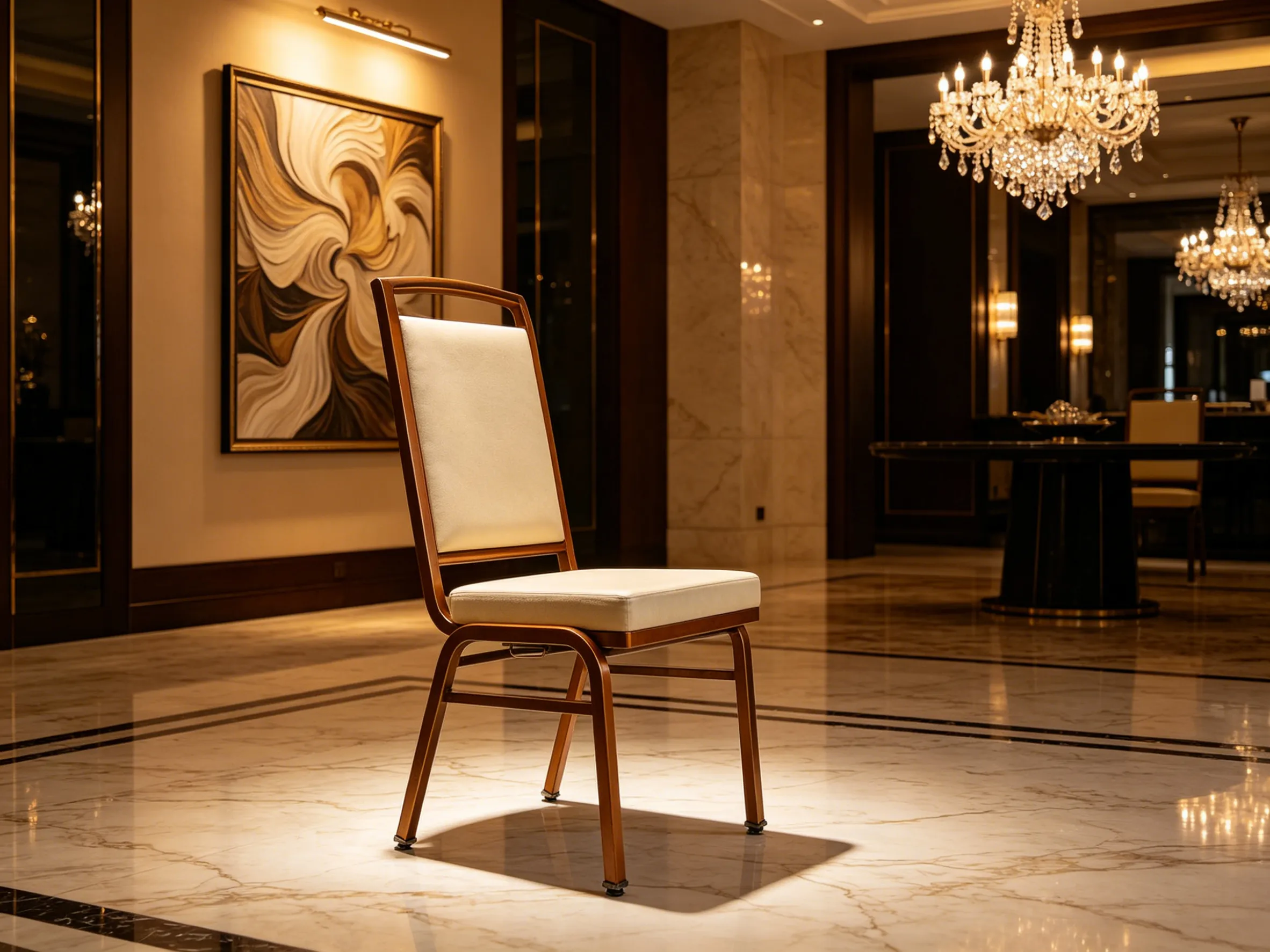
Molded foam + commercial vinyl: the workhorse combination for daily-turnover venues.
Section 05Stackability & Storage
Every venue stacks chairs; almost nobody reads the stacking spec. Rated stack heights by type: steel banquet chairs 8-10 high, Chiavari/resin 6-7, aluminum 6-8. Upholstered armchairs should never be stacked at all.
Four rules prevent 90% of storage damage: stack on a trolley (the bottom chair carries the column), align frame to frame so cushions never bear leg weight, roll stacks instead of dragging them, and strap stacks before moving through corridors. If your chairs scratch every time they're stacked, the frame lacks protective bumpers or recessed contact points — a design flaw you can check for in a sample before ordering a fleet.
Section 06Chair Styles: Chiavari, Napoleon, Ghost, Classic
Once the build spec is settled, style is a venue-positioning decision:
- Chiavari — the wedding industry's default: light (~5kg), airy spindle back, stacks 6-7 high. Resin one-piece versions survive rental fleets; aluminum versions suit permanent venues. Gold, silver, mahogany and white are the safe stock colors.
- Napoleon — hand-carved statement piece for heritage venues, embassies, and baroque or "royal" wedding themes. Heavier and lower-stacking; buy for the photograph, not the turnover speed.
- Ghost (clear polycarbonate) — the barely-there modern look. Specify injection-molded polycarbonate, not cast acrylic: acrylic yellows within 1-2 years of sun and cleaning chemicals, while polycarbonate stays crystal-clear and shrugs off impacts.
- Classic banquet (steel frame) — the invisible workhorse for hotels and conference centers: one design serves conferences, galas, weddings, and daily F&B, and replacement chairs match your fleet years later.
Browse our current chair series — including stainless steel banquet chairs, clear acrylic wedding chairs, and upholstered banquet chairs — to see each style with full specifications.
Section 07MOQ & Pricing: Factory-Direct vs Distributor
Factory-direct MOQs typically start at 50-100 chairs for stock models and 200 for fully custom designs (frame color, fabric, branding). Below that, a distributor or wholesaler is usually the practical route — you'll pay 30-50% more per chair but get local stock, small quantities, and fast delivery.
Above 100 chairs, the math flips hard: factory-direct pricing plus a full container of sea freight lands chairs at 40-60% of typical distributor pricing — with custom colors and OEM branding included. The crossover point is roughly where the distributor's convenience premium exceeds the freight cost per chair.
Section 08Lead Time & Shipping
Build your timeline backwards from the event date:
- Production: 15-20 days for stock models; 25-35 days for custom colors/fabrics (add 3-5 days if you want a physical sample approved first)
- Sea freight: ~18-30 days to Middle East / Southeast Asia / US West Coast; 30-40 days to Europe and US East Coast
- Customs + local delivery: 5-10 days depending on port
Total runway for a factory-direct bulk order is 7-10 weeks. The most common expensive mistake we see: a venue books its autumn season, then orders chairs in August — and pays air-freight premiums or loses the booking. Order in the off-season and sea-freight a full container at the lowest landed cost per chair. A 40HQ container holds roughly 1,200-1,400 stackable banquet chairs, which is why full-container orders get the best freight economics.
Section 09The Pre-Order Quality Checklist
Before you sign a proforma invoice, get these in writing — the same 15-point logic our own QC line runs on every batch:
- Frame tubing thickness: 1.2mm minimum, stated on the PI
- Frame material grade named exactly (e.g. "304 stainless", not "stainless-look")
- Weld photos of leg joints from actual production units
- Foam: 2.5" high-density molded, with density stated
- Fabric weight ≥ 250 g/m², fire rating named (CA-117 / BS 5852)
- Rated stack height and stacking-bumper design confirmed
- Replaceable seat pads — and spare pads/glides availability
- Load rating (150kg+ for commercial duty)
- Powder-coat pre-treatment process (wash before coating)
- Warranty term in years, on frame specifically (5 years is the serious-factory norm)
- Pre-shipment QC: photos/video of your actual batch before container loading
- Packing spec: stack wrapping + corner protection for sea freight
- Certifications: ISO 9001 factory, EN 16139 / BIFMA X5.4 product compliance
- Sample policy: prototype in days, cost credited against bulk order
- Payment terms: deposit/balance split, and inspection window before balance
A supplier who hesitates on any of these is telling you something. A factory that runs a 15-point inspection line will answer all fifteen in one email.
Section 10Buyer's FAQ
What is the best frame material for banquet chairs?
What frame thickness should commercial banquet chairs have?
How many banquet chairs can you stack safely?
What is a typical MOQ for banquet chairs direct from a factory?
How long does production and shipping take?
Quick ProcessHow to Choose Banquet Chairs in 6 Steps
- Match the chair spec to how hard it will be used: daily hotel ballroom turnover, weekly event rental, or occasional conference use each demand different frame and upholstery grades.
- Powder-coated steel for value, aluminum for light weight, 304 stainless for humid or coastal venues, resin for Chiavari-style elegance, wood for classic ballrooms.
- Insist on 1.2mm commercial-grade tubing (not 0.8mm budget stock) and clean, fully-penetrated welds at the leg joints.
- Vinyl for high-spill banquet duty or woven fabric for premium rooms, with 2.5-inch high-density molded foam and replaceable seat pads.
- Check the rated stack height (8-10 for steel banquet chairs), stacking bumpers, and trolley compatibility before ordering.
- Confirm minimum order quantity, 25-35 day production windows, pre-shipment QC photos, and warranty terms on the proforma invoice.