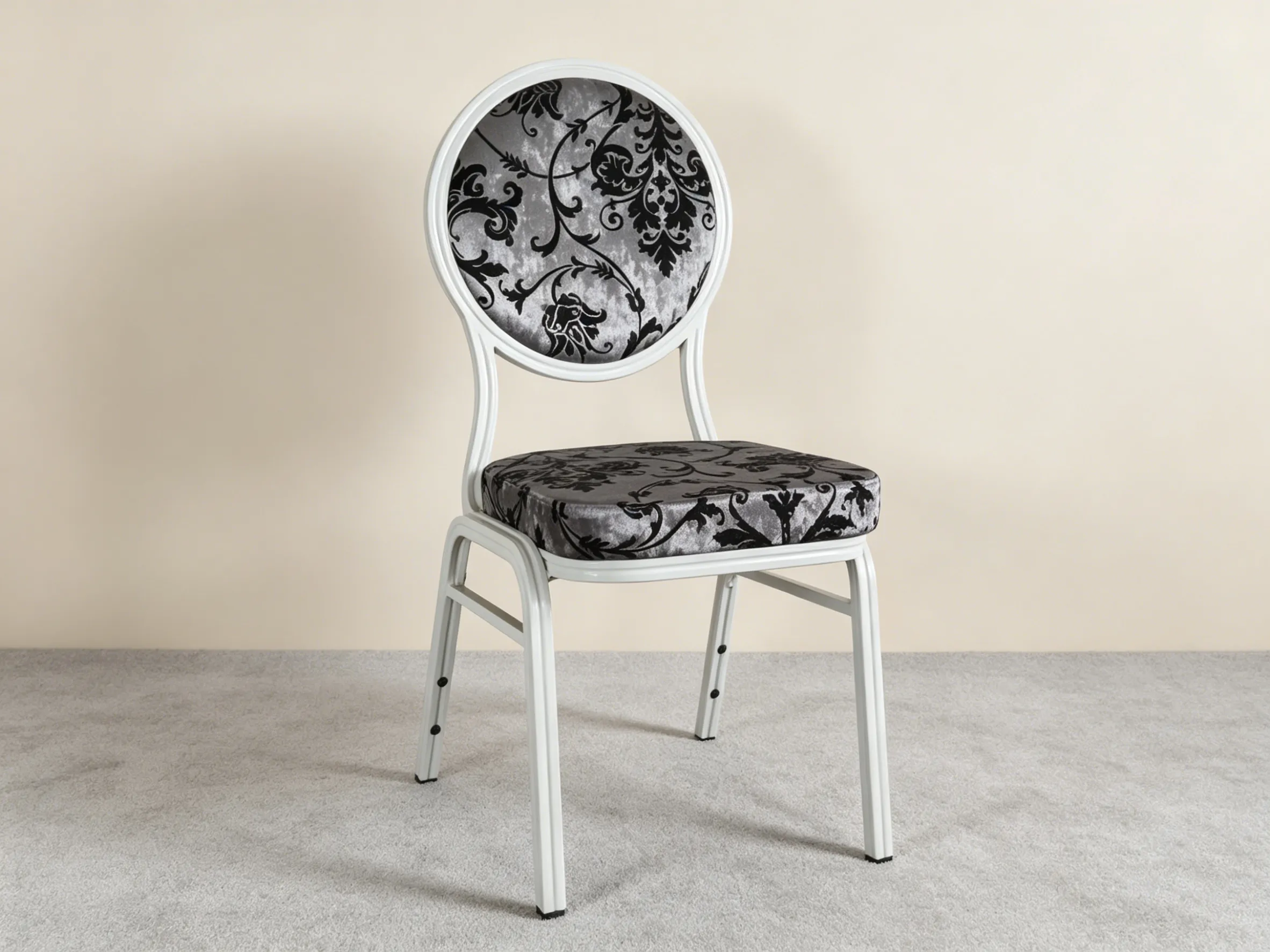
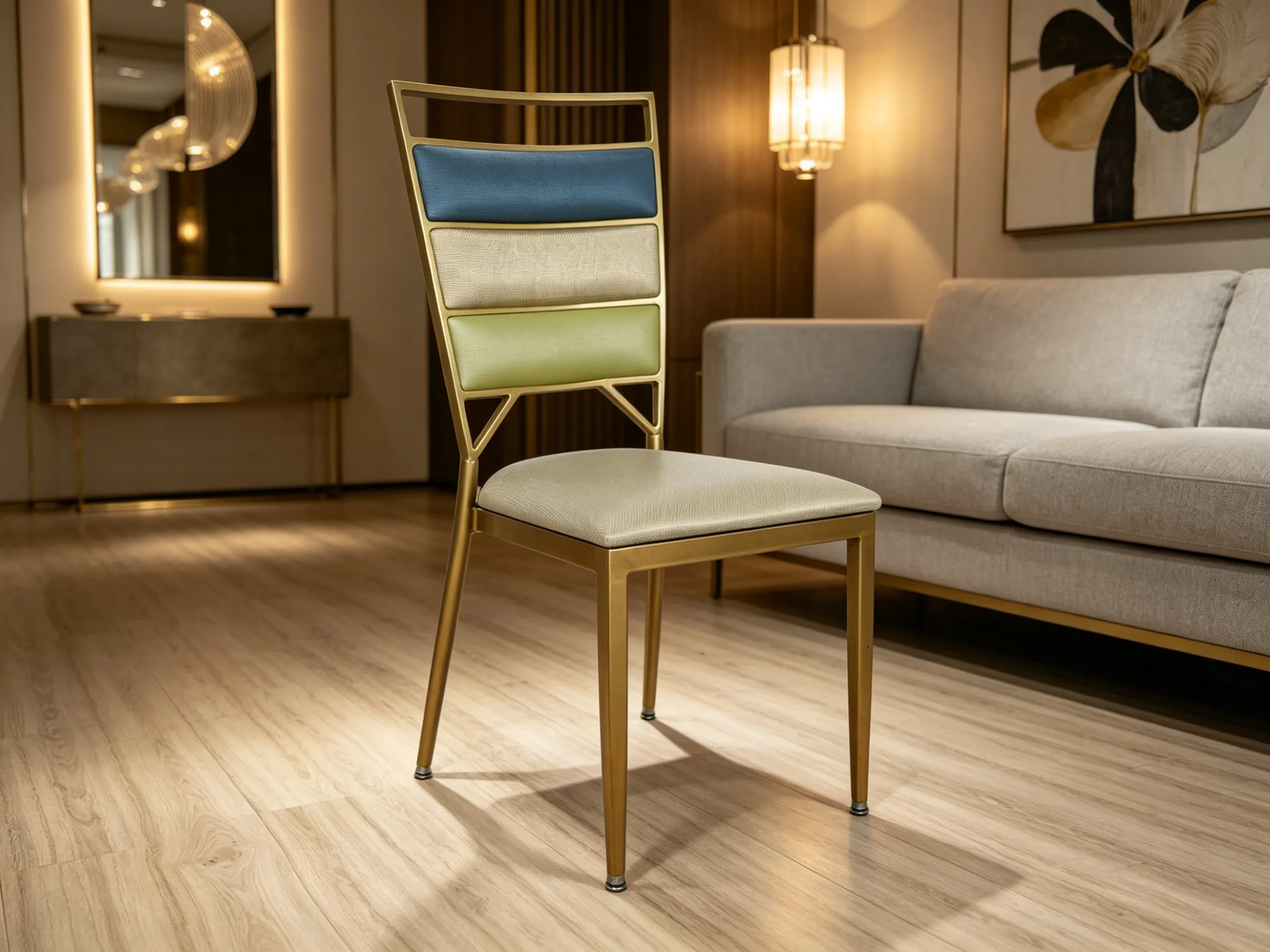
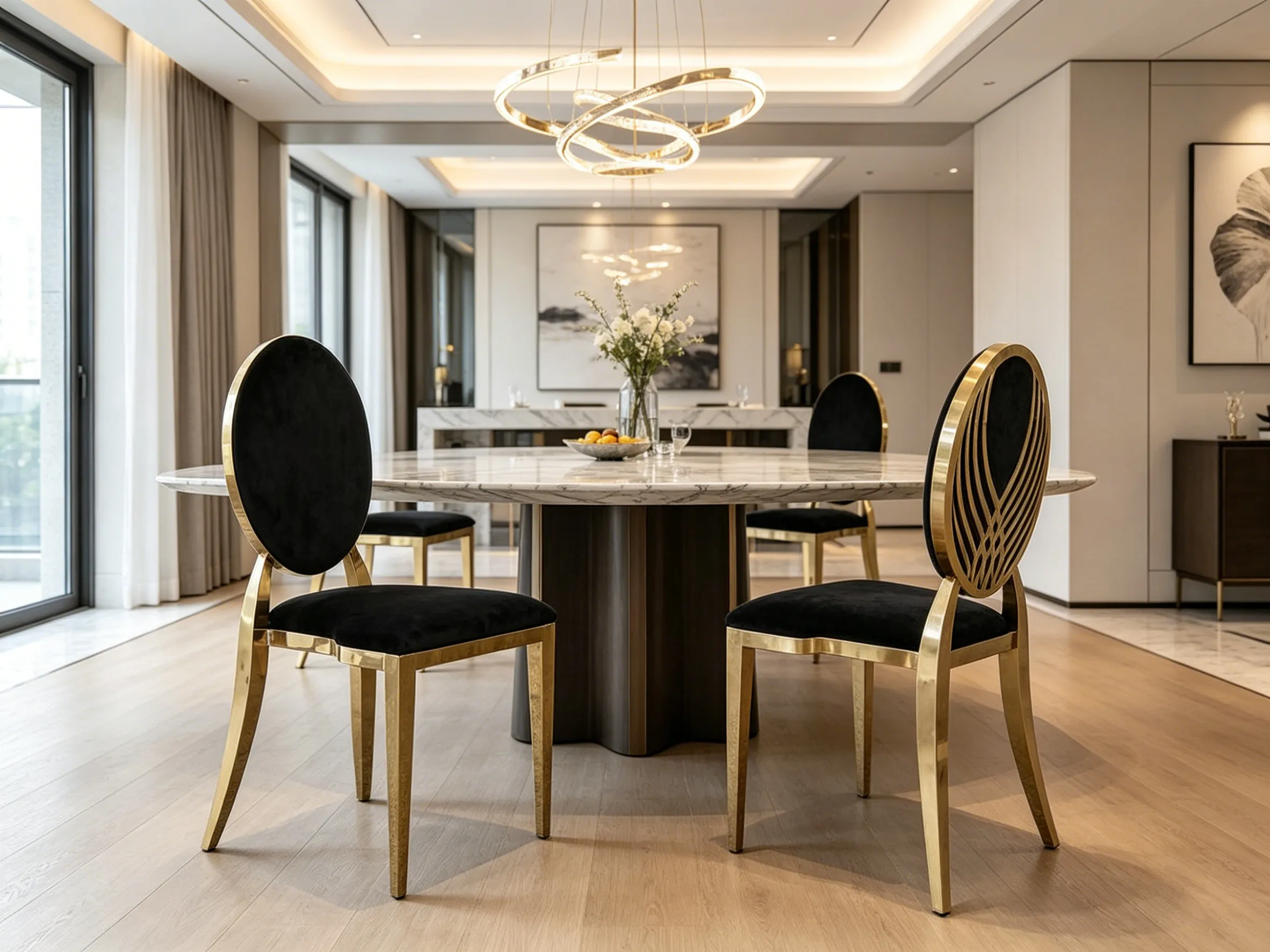
School seating takes abuse no hotel ever sees. Multi-purpose halls host assemblies in the morning, exams at noon and drama rehearsals after class; cafeterias cycle hundreds of students through lunch; and once a year the same chairs line up in perfect rows for graduation — dragged, dropped and stacked by students and staff in between.
BanquetJoy manufactures heavy-duty stacking banquet chairs in a 30,000-square-meter Foshan factory with annual capacity of 500,000 pieces. We supply schools, districts and education-furniture distributors in 60+ countries with factory-direct pricing, rounded-edge construction and custom finishes in school colours. That is why districts specify contract-grade stacking chairs rather than domestic furniture.
How Schools Use Multi-Purpose Seating
One school hall does the work of five commercial venues:
- Assemblies and ceremonies: the whole student body seated at once — and every row on camera at graduation.
- Exams: hundreds of chairs laid out in silence, then stacked away the same afternoon.
- Cafeteria service: two or three lunch sittings daily, with food and drink spills guaranteed.
- Community use: parent evenings, performances, clubs and weekend lettings.
- Lettings income: halls hired by outside clubs add further handling cycles and wear.
Handling is done by caretakers — and students. Chairs are dragged across floors, dropped off stacks and occasionally tested to destruction. Procurement has to assume rough treatment as the default, and buy frames, joints and fabrics specified for it.
Graduation is the one day the fleet must look flawless: rows are photographed from every angle and livestreamed to families, so finishes, colours and alignment matter as much to the headteacher as to the caretaker. Chairs that survive a school year intact are the exception unless they are built for contract use — buy on total cost per year of service, not unit price. Replacement cycles shrink fast when chairs are bought on price alone.
Selecting Chairs That Survive Students
School specifications prioritise safety and service life over frills:
| Component | Recommended Spec for Schools | Why It Matters |
|---|---|---|
| Frame | Steel 1.2-1.5 mm, fully welded joints | Survives dragging and dropping; no loose bolts to patrol |
| Edges | Rounded corners and smooth tube ends | Fewer sharp points in a room full of children |
| Stacking | Anti-pinch stacking design, 8-12 high | Protects fingers when students help stack |
| Fabric | Vinyl or contract fabric, 50,000+ Martindale | Vinyl wipes clean in cafeterias; heavy fabric suits halls |
| Glides | Replaceable nylon glides | Protect gym and hall floors from dragging damage |
| Finish | Tough powder coating in school colours | Hides scuffs and touches up easily between terms |
Fire safety deserves early attention: many school procurements require flame-retardant upholstery. Flame-retardant fabric and foam options are available on request — tell us the standard your district or authority specifies, and we will match materials accordingly and provide the material supplier's test documentation.
Specify one chair for every space: a single model across hall, cafeteria and exam rooms means one spares kit, one stacking routine and one colour standard — and reordering years later stays simple. A standard fleet also photographs better at graduation. For assembly halls used as exam rooms, a writing-tablet option is available on some models — ask at quotation.
For cafeterias and humid climates, stainless steel chairs tolerate daily wipe-downs and never corrode under spilled drinks.
Operations: Stacking, Cleaning & Spares
Caretaking teams need chairs that work with them:
- Stacking: 8-12 chairs per stack on dollies; a 300-seat hall clears in under an hour.
- Floor protection: fresh glides each term keep hall and gym floors free of drag marks.
- Cleaning: vinyl wipes down with standard sanitizer; patterned contract fabric hides scuffs between deep cleans.
- Spares kit: order 2-3% extra glides and cushions with the container; most repairs take minutes, not purchase orders.
- Inspection habit: a quick per-term check of welds and glides catches damage before it reaches a student.
- Stack discipline: label dollies with the target count so student helpers load stacks correctly.
Purpose-built dollies are essential kit: they cut manual carrying, protect frames from drops and let a two-person team move 40-50 chairs in one trip; add them to the container order so they arrive with the fleet. Replacement glides cost cents — a scratched gym floor costs a term's maintenance budget.
Buy one model across hall, cafeteria and exam use — a single spares kit and one stacking routine covers the whole campus, and standardising simplifies safety checks because every stack behaves the same way.
Procurement Cycles & Budgets
School buying follows the academic calendar and the budget year, so timing the order matters as much as the price:
- MOQ: 100 pieces per model and colour — one hall, or a joint order across several schools in the district.
- Tiered pricing: per-chair cost steps down with quantity; district-level container orders achieve the lowest unit cost.
- Lead time: production 20-25 days after deposit, plus 3-5 weeks sea freight; order by spring to guarantee delivery in the summer break before the new school year.
- Approval documents: proforma invoices, specification sheets and material test documentation formatted for procurement committees and tender files.
- Payment: T/T 30% deposit, 70% before shipment; third-party inspection welcome.
- Phased roll-out: furnish one block per budget year; archived specifications keep later phases visually identical.
Freight and any local duties sit outside the chair price — we quote EXW, FOB or CIF so the business manager can show the board a clean landed cost, and tenders can reference our specification sheets directly. Order by spring for summer-break delivery; for January-start school years, order by early autumn, and allow a week for internal clearance and hall setup before term starts.
Samples arrive in 7-10 days — test them in the hall for a week of real student traffic before the board approves the full order.
Why Schools & Districts Choose BanquetJoy
- Factory-direct value: a 30,000-square-meter manufacturer with 500,000 chairs of annual capacity — limited budgets furnish more rooms.
- School identity: custom frame and fabric colours in school colours via OEM/ODM, plus logo options for graduation-day photos.
- Safety-minded construction: rounded edges, anti-pinch stacking and flame-retardant material options built into the specification.
- Documented quality control: load and stacking tests with pre-shipment photo and video reports for your procurement file.
- Export experience: chairs shipped to 60+ countries, with repeat orders held to identical specifications year after year.
- Tender-ready documents: proforma invoices, specification sheets and QC reports formatted for procurement files.
Districts reordering across multiple years benefit from archived specifications: the batch delivered for the new campus matches the chairs already in service elsewhere. Payment is T/T — 30% deposit, 70% before shipment — with inspection reports issued before the balance falls due.
Share your seating count, storage space and delivery deadline — our export team replies within 24-48 hours with pricing and a delivery plan matched to the academic calendar. One seating count and one deadline are all we need to begin planning.