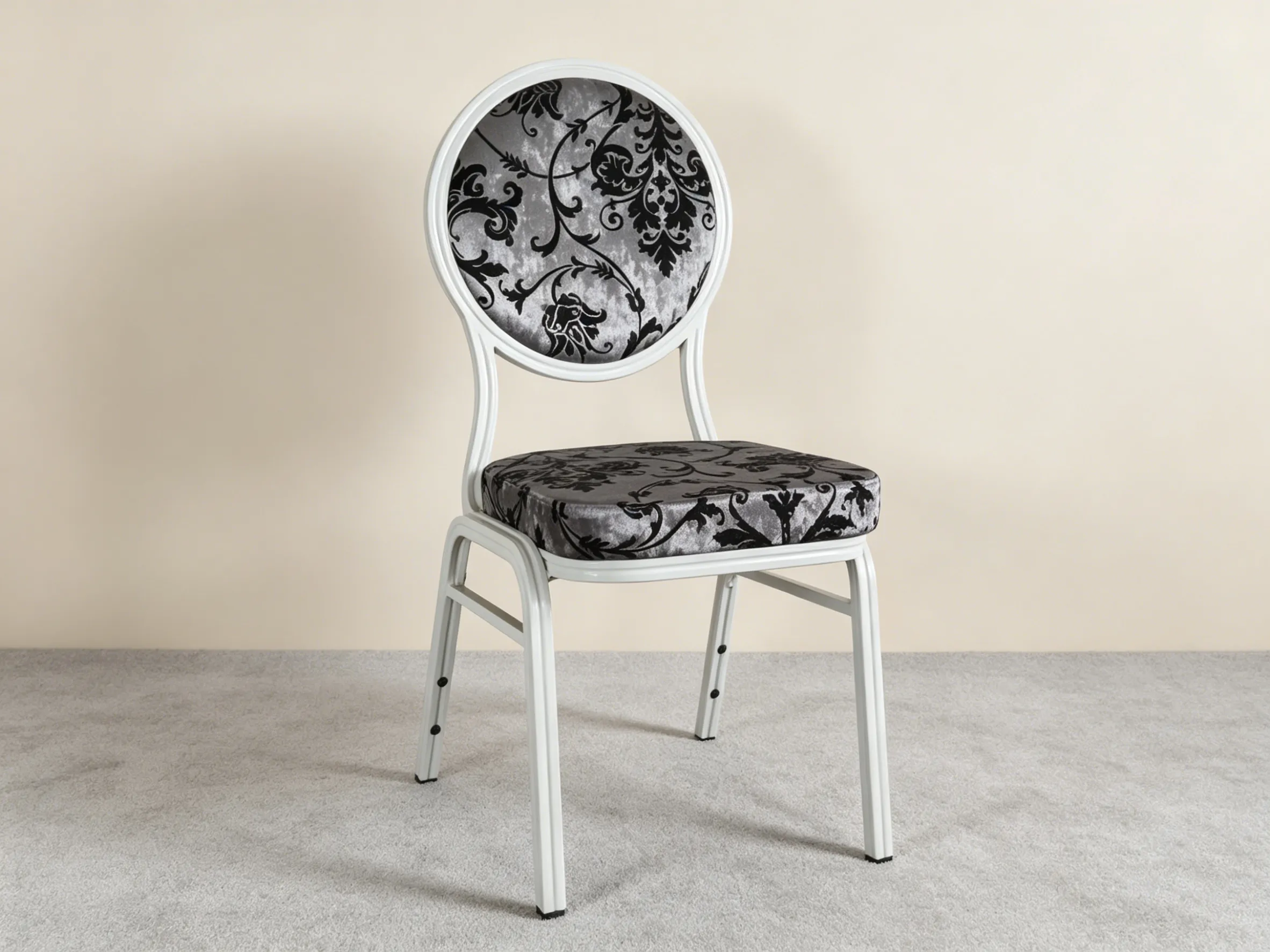
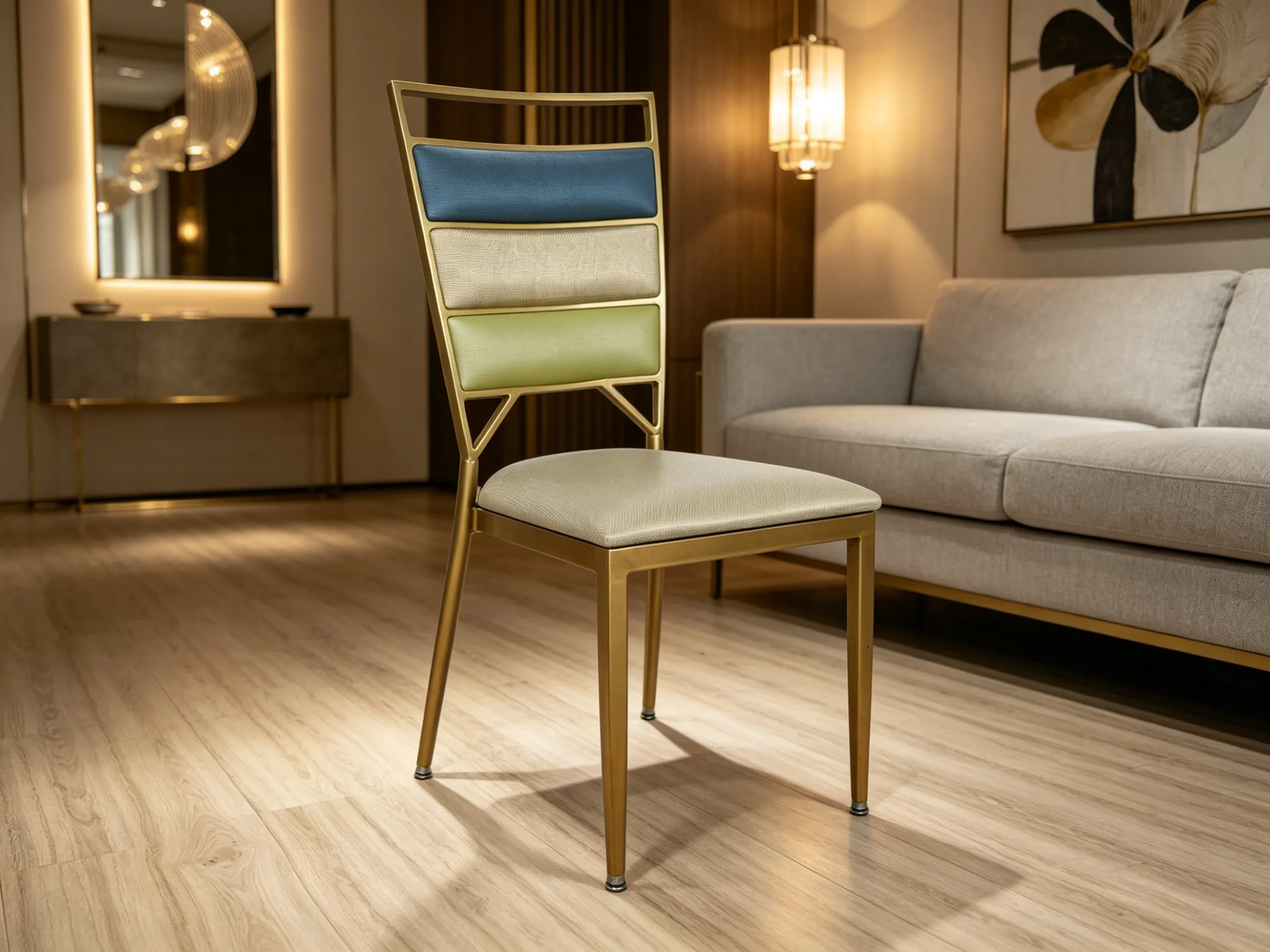
A church chair rarely stays in one room. The same fleet serves Sunday fellowship meals, midweek classes, weddings, funerals, holiday pageants and community fundraisers — moved, stacked and reset by volunteers every week, and expected to look dignified at every occasion, from joyful receptions to quiet memorial services.
BanquetJoy builds durable, budget-friendly stacking banquet chairs in a 30,000-square-meter Foshan factory with annual capacity of 500,000 pieces. We supply churches, dioceses and religious-goods distributors in 60+ countries, with custom options such as book racks, linking clips and deep, stain-forgiving fabrics. Factory-direct pricing stretches furnishing budgets further, so more of every fundraiser reaches the congregation.
How Church Halls Use Their Chairs
A fellowship-hall chair serves more roles in a month than most commercial chairs do in a year:
- Sunday gatherings: overflow seating, fellowship meals and coffee hours after the service.
- Life events: weddings, funerals, baptisms and confirmations — occasions where worn or wobbly chairs are simply not acceptable.
- Community programs: food banks, choir practice, youth groups, study classes and fundraising dinners through the week.
- Seasonal peaks: Easter and Christmas services demand every seat the building can hold.
- Multi-site congregations: several campuses sharing one specification keep transfers between sites invisible.
The people moving these chairs are volunteers, not a banqueting crew — often older members of the congregation. Weight, stacking height and safe handling matter as much as durability, and every chair must be stable and comfortable for children and elderly worshippers alike.
Many congregations also rent their halls to outside groups — a useful income stream, but one that doubles the handling cycles. Chairs specified for church use should assume weekly stacking as the minimum, not the exception; sanctuary seating for special services may also need to link into straight, pew-like rows, so specify linking clips at order time.
Choosing Chairs for Church Budgets & Use
Church purchasing committees balance a tight budget against decades of expected service:
| Component | Recommended Spec for Churches | Why It Matters |
|---|---|---|
| Frame | Steel 1.2-1.5 mm, powder-coated | Best cost-per-year of service; shrugs off volunteer handling |
| Fabric | Dark, patterned contract fabric, 30,000+ Martindale | Hides stains between cleanings; patterns disguise years of wear |
| Foam | High-density foam, 30-40 kg/m³ | Comfortable through long services without sagging |
| Options | Book racks, linking clips, card pockets | Book racks hold hymnals and Bibles; clips form neat pew-like rows |
| Glides | Replaceable nylon glides | Protect tile and timber floors; silent during services |
| Seat | Waterfall front edge, contoured seat | Keeps elderly worshippers comfortable through long services |
Simple iron-frame banquet chairs cover the everyday hall at the lowest cost per seat, while affordable wedding-style chairs dress up sanctuary events. Both stack for compact storage, and both accept the custom options above.
Think in decades, not seasons: a well-specified steel stacking chair routinely serves a congregation for 15-20 years, which is why fabric grade and replaceable components matter more to a church than to a short-lease commercial tenant. Both frame colours and fabric shades can be matched to existing pews and carpet. A 15-year-old chair that still stacks straight is the cheapest chair a church will ever buy.
Volunteer-Friendly Handling & Care
Design your purchase around the people who will actually move the chairs:
- Weight: keep individual chairs around 5-8 kg so one volunteer can carry two safely.
- Stacking: 8-10 chairs per stack on a purpose-built dolly; stacks should slide, not be lifted, into storage corners.
- Cleaning: spot-clean fabric with mild detergent; a patterned mid-dark weave forgives coffee spills between deep cleans.
- Spares: a box of replacement glides and a few spare seat cushions handles years of minor damage in-house.
- Repairs: powder-coated frames touch up with matching paint — a volunteer with a brush can do it.
- Storage footprint: measure the storage room first; stacked chairs need far less floor space than the set-up hall.
Keep a simple record of fabric codes and frame colours; it makes phased, year-by-year expansion look like a single planned purchase.
A purpose-built chair dolly is the single best accessory purchase: it cuts carrying, protects frames and lets two volunteers move 40-50 chairs in one trip. Add dollies to the container order so they arrive with the fleet, and label each dolly with the target stack height so new volunteers load it correctly the first time.
Budgeting, Committees & Ordering
Church purchases move at the speed of committee meetings and fundraising cycles, so plan backwards from the date the chairs are needed:
- MOQ: 100 pieces per model and colour — achievable for a single fellowship-hall order or a joint purchase between congregations.
- Phased buying: order hall by hall across budget years; we archive your specifications so later batches match earlier ones.
- Pricing: per-chair cost steps down with quantity — a full-hall container order costs noticeably less per seat than a small batch.
- Timeline: production 20-25 days after deposit, plus 3-5 weeks sea freight to most ports; order 10-12 weeks before Easter or Christmas deadlines.
- Payment: T/T 30% deposit, balance before shipment; proforma invoices formatted for committee approval.
- Joint purchases: sister congregations or dioceses can combine into one container for the best tier of pricing.
Freight and any local duties sit outside the chair price — we quote EXW, FOB or CIF so the committee can see landed cost clearly. For fundraising appeals, we provide proforma documentation showing the full project cost in advance.
Order early in the fundraising cycle: a confirmed quotation with 30-day validity gives the appeal a concrete target, and the deposit locks the production slot once the fund is raised.
Samples arrive by courier in 7-10 days — enough time for the committee to sit, stack and vote before committing the fund.
Why Churches Buy Factory-Direct from BanquetJoy
- Budgets go further: buying from a 30,000-square-meter factory removes distributor and retail margins, so limited furnishing funds cover more of the hall.
- Church-specific options: book racks, linking clips, cushion densities and colours matched to existing pews and interiors via OEM/ODM.
- Durable by design: steel frames, contract fabrics and replaceable wear parts sized for decades of volunteer handling.
- Honest quality control: load and stacking tests, pre-shipment photo and video reports; third-party inspection welcome.
- Export experience: 500,000 chairs a year shipped to 60+ countries, with documentation your customs broker will find familiar.
- Samples for committees: courier samples in 7-10 days let every member sit and compare before the vote.
Many churches reorder years later as the congregation grows; archived specifications mean new chairs sit beside old ones without a visible seam. Payment is T/T — 30% deposit, balance before shipment — with photo and video QC reports before the balance falls due.
Tell us your hall size, storage space and target budget — our export team replies within 24-48 hours with a quotation and freight options. One hall measurement and one budget figure are all we need to begin.